
When the Mother Tongue Fades
Irania Carrazco
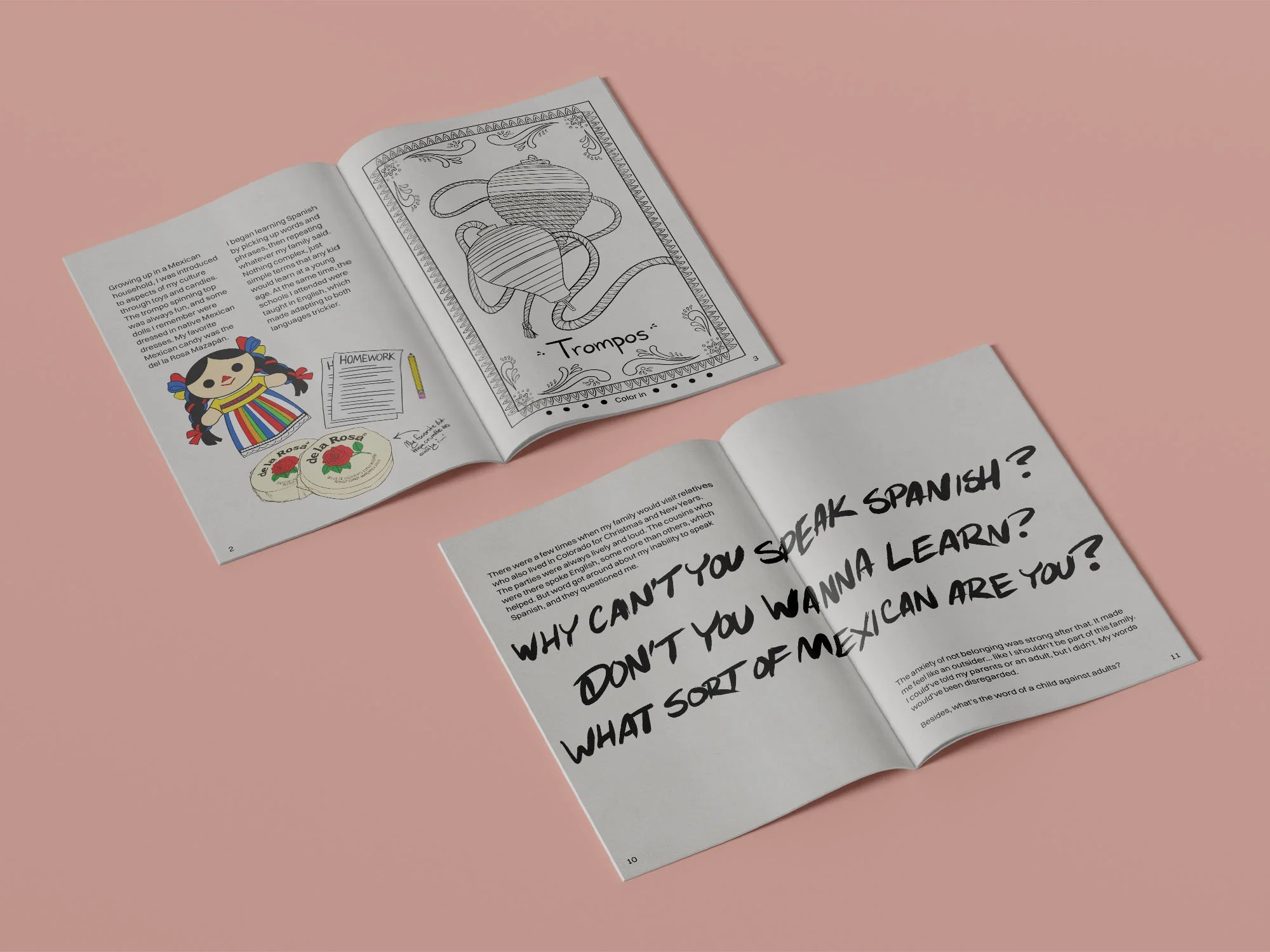
“When the Mother Tongue Fades” explores the basis of first-language attrition, how the loss of one’s first language influences their identity and connection to heritage, and how they navigate that disconnect. Using communication and narrative design, this project will tell my first-hand account from a young age to the present day in the form of an illustrative zine, utilizing visual elements and cultural signifiers I have connected with as coloring book pages to visually communicate efforts to reconnect with cultural heritage and identity.
Families who migrate to the U.S. do so for a variety of reasons: a fresh start, financial stability, sanctuary, job opportunities, and more. While these families adapt to an entirely different lifestyle and culture, it doesn’t come without issues. In the United States, where English is the dominant language, families learn English while retaining their native language, but some individuals aren’t as fortunate.
Some lose elements of their native language as they adapt to English; this phenomenon is known as first-language attrition, the loss or change of one’s native language while learning a second language. Those who experience this attrition are not only disconnected from their native tongue but also from their family and cultural heritage. And this sort of disconnect doesn’t come without consequence, especially to one’s psyche. It creates a rift of conflict and confusion, doubt about self-identity, and a sense of not belonging. Rarely discussed publicly, this phenomenon influences one’s personal and familial identity and creates a sense of alienation from one’s own cultural connection. But this attrition isn’t a one-and-done deal, as many who have lost their native tongue make efforts to reconnect. Many who are and have been affected by this language loss have found ways around it, reconnecting to a heritage that is part of them. The loss of the native tongue doesn’t make up a person entirely; it is an unplanned offset that can challenge a person’s identity yet place them within a bandwidth between their present culture and heritage.