Where Sound Breaks
Katherine Johnson
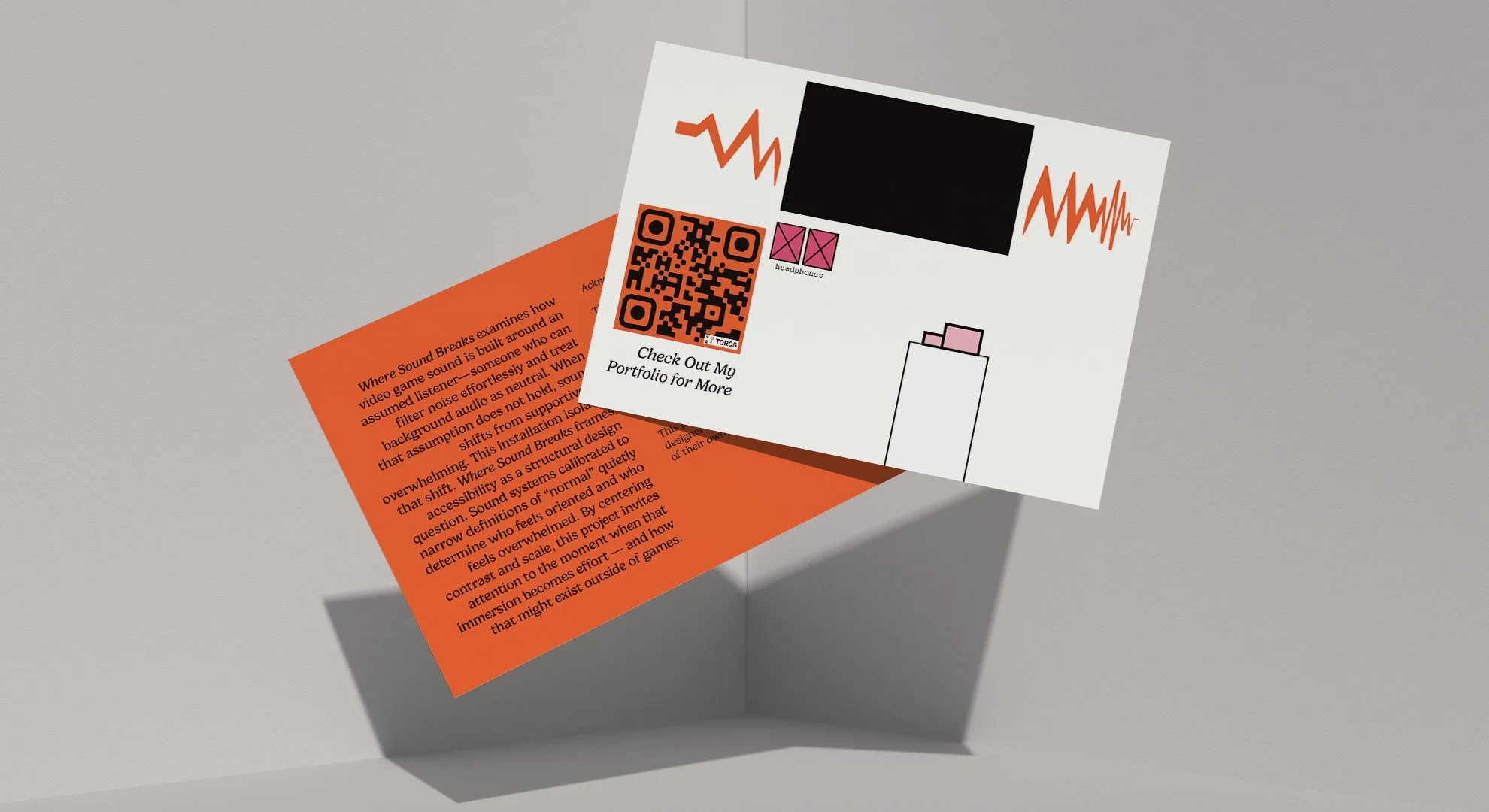
Where Sound Breaks examines how video game sound is built around an assumed listener—someone who can filter noise effortlessly and treat background audio as neutral. When that assumption does not hold, sound shifts from supportive to overwhelming. This installation isolates that shift.
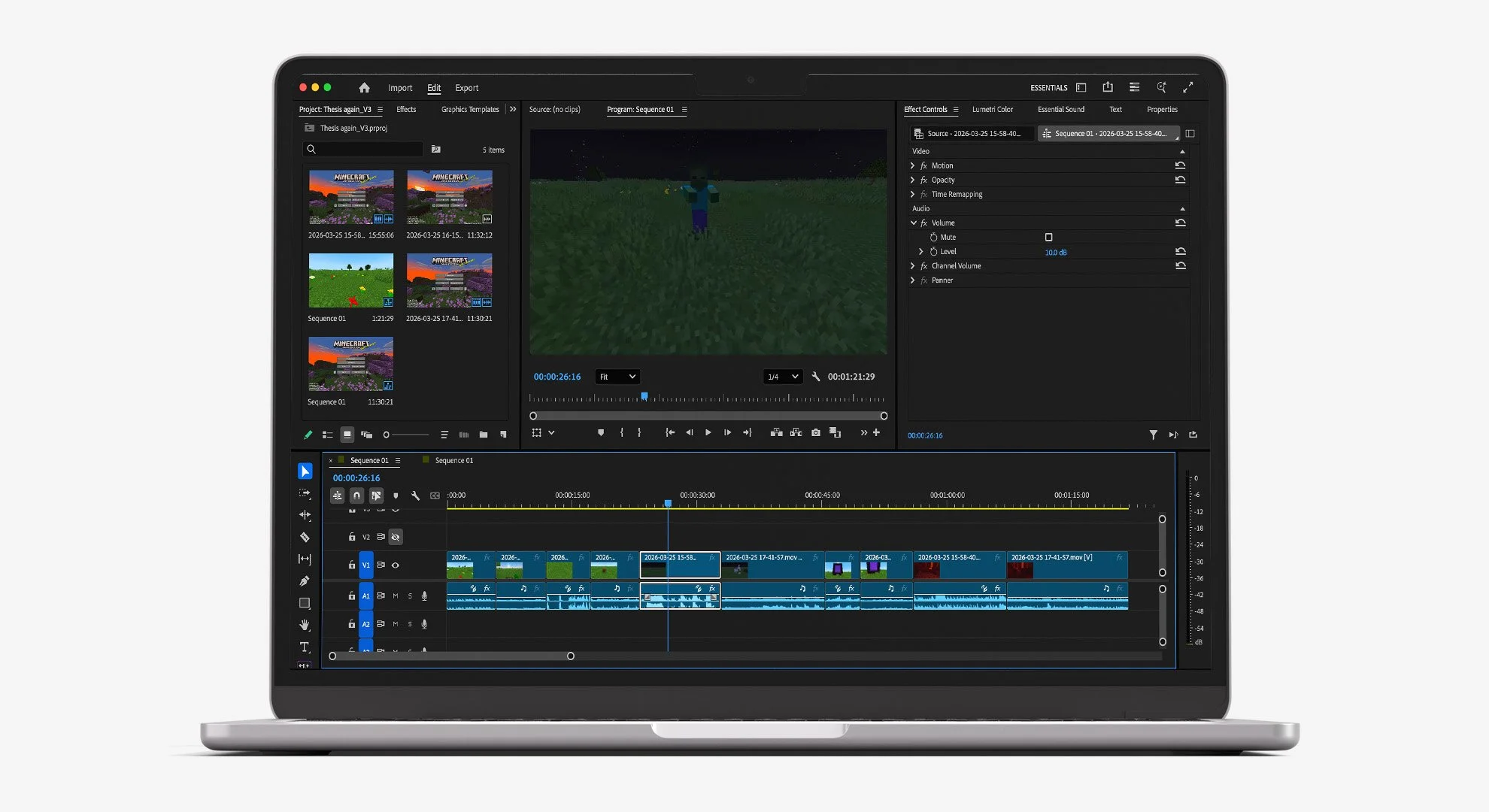
A looping video presents the same Minecraft gameplay scene in two alternating audio conditions separated by brief pauses. In the first, sound guides attention and reinforces space. In the second, layering and persistence increase, reducing hierarchy and clarity. Nothing visual changes. The difference emerges through listening alone. By amplifying contrast between these two conditions, the work makes audible how small design decisions shape cognitive strain. Cognitive Load Theory, first articulated by John Sweller, explains that working memory has limited capacity while long-term memory organizes and stores information.1 Research on auditory attention—including the ‘cocktail party problem,’ which describes how listeners filter competing sounds2—further informs how layering can disrupt focus and increase effort.
The installation frames accessibility as a structural design question. Sound systems calibrated to narrow definitions of normal quietly determine who feels oriented and who feels overwhelmed. By centering contrast and scale, WhereSound Breaks invites attention to the moment when immersion becomes effort.