
Viñette
Jenn Guelich
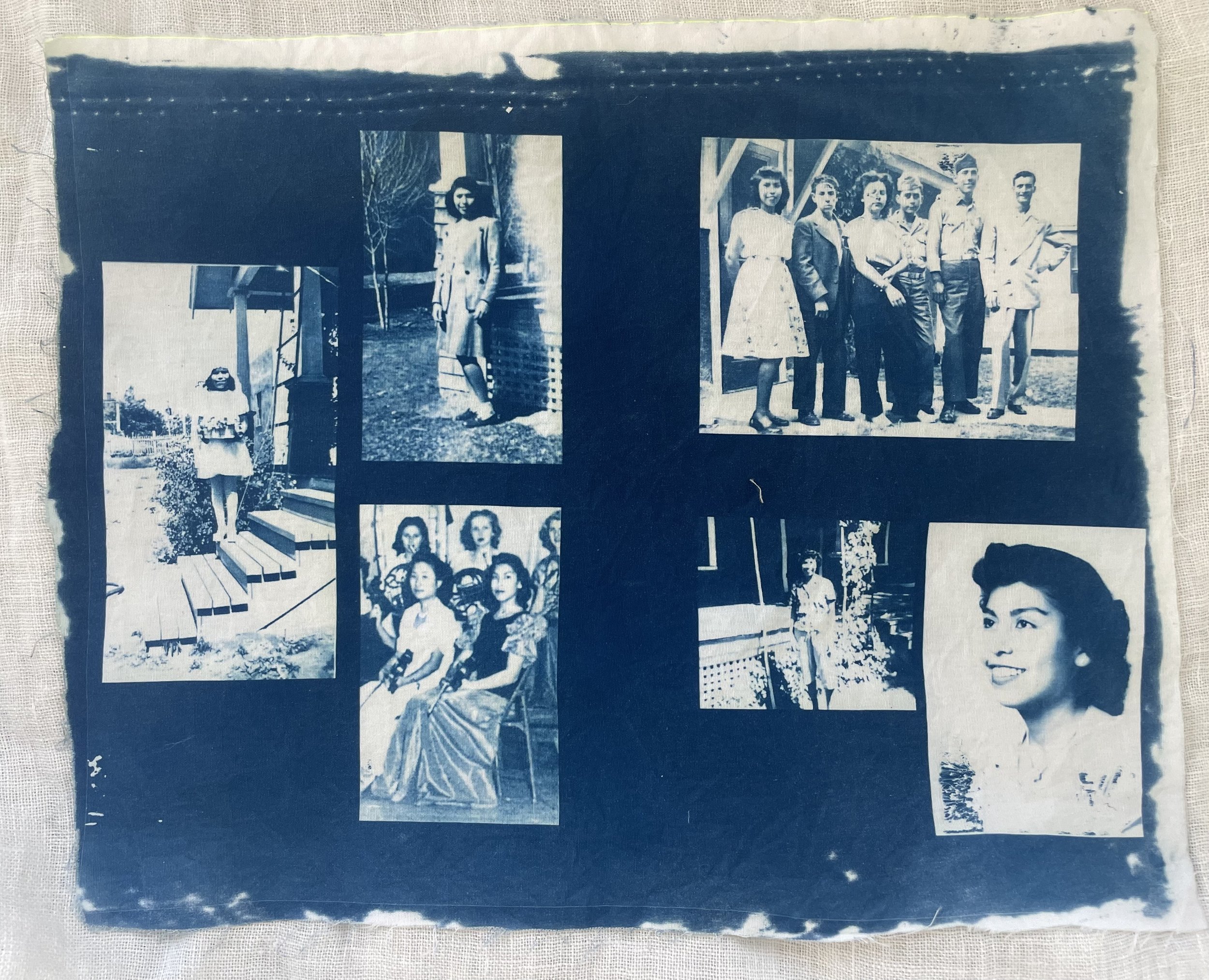
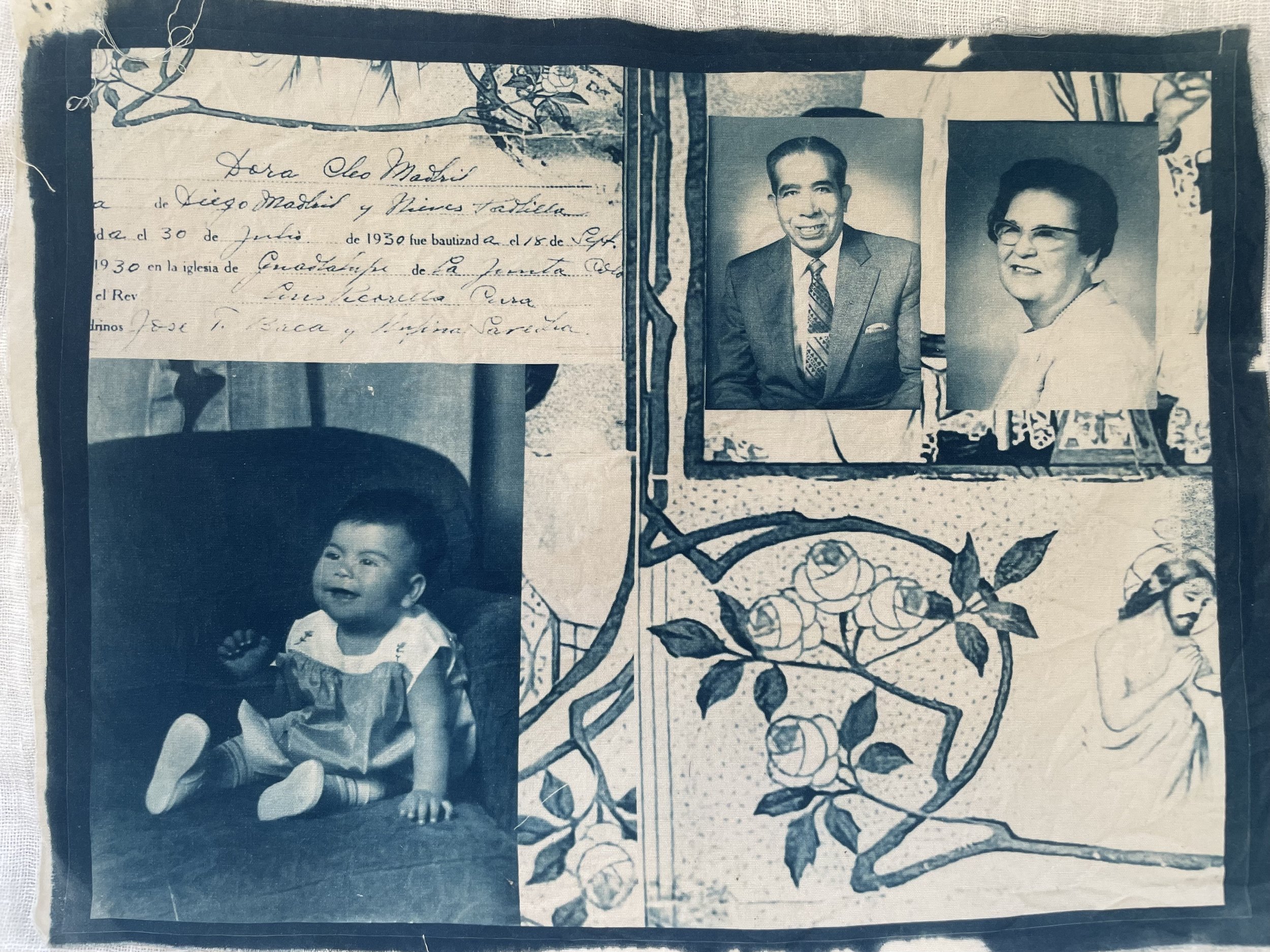
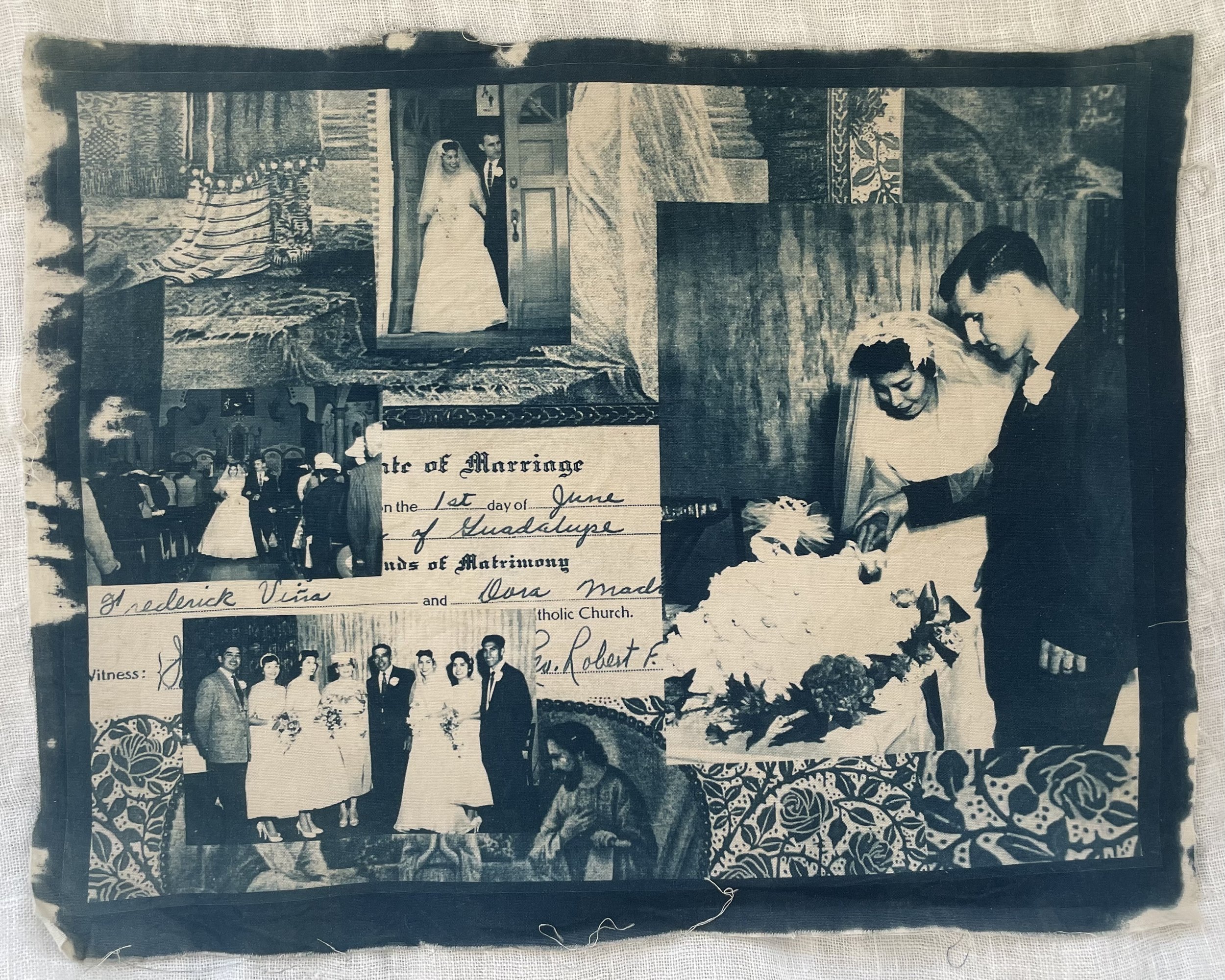
Viñette is an altar constructed from light, chemistry, and time. Through photography and cyanotype, I explore the memories of my grandmother Dora Madrid Viña, whose life spans nearly a century of social and technological development. The visual archive of her life becomes the lens through which I examine how memory and perception shift over time. Viñette spans Dora’s lived experience, holding her image as both document and offering.
Dementia, including Alzheimer's disease, alters the brain’s ability to encode and retrieve memory. Neuroscientific research shows that memory is not a fixed recording but a reconstructive process, largely coordinated by the hippocampus and shaped by emotional centers such as the amygdala. Each act of recall rewrites the memory slightly. In dementia, this rewriting becomes distortion. The archive becomes fluid. The self becomes vulnerable to erosion.
Over 55 million people live with Alzheimer's, and that number is projected to rise to 139 million by 2050.1 Memory loss is no longer an isolated medical condition determined by genetics; it is a societal and cultural concern. Contemporary life prioritizes immediacy and as a result, the brain engages less actively in recall, reducing the friction that memory strengthens.
A photograph appears as an objective record of light at a specific time. It offers reassurance against the fluidity of memory. Images are not immune to reinterpretation and they require viewers to provide context. In doing so, they activate the very reconstructive processes that dementia disrupts. Photographs need narrative to live. They trigger memory but do not restore it.
This installation does not aim to define dementia but to initiate a conversation between neuroscience and devotion. If the hippocampus falters, what remains? If memory fades, can visual ritual preserve presence and identity? By re-presenting my grandmother’s imagery through the ephemeral nature of cyanotype, I am acknowledging that time is unstable. Viñette becomes a space where documentation and deterioration coexist while holding the paradox that is memory within biological circuitry and emotional inheritance. The work insists that even as cognition shifts, relational memory can endure. Can documentation stand in for recall? Can devotion counteract disappearance? It is not a cure. It is an act of courage, perseverance, and love.