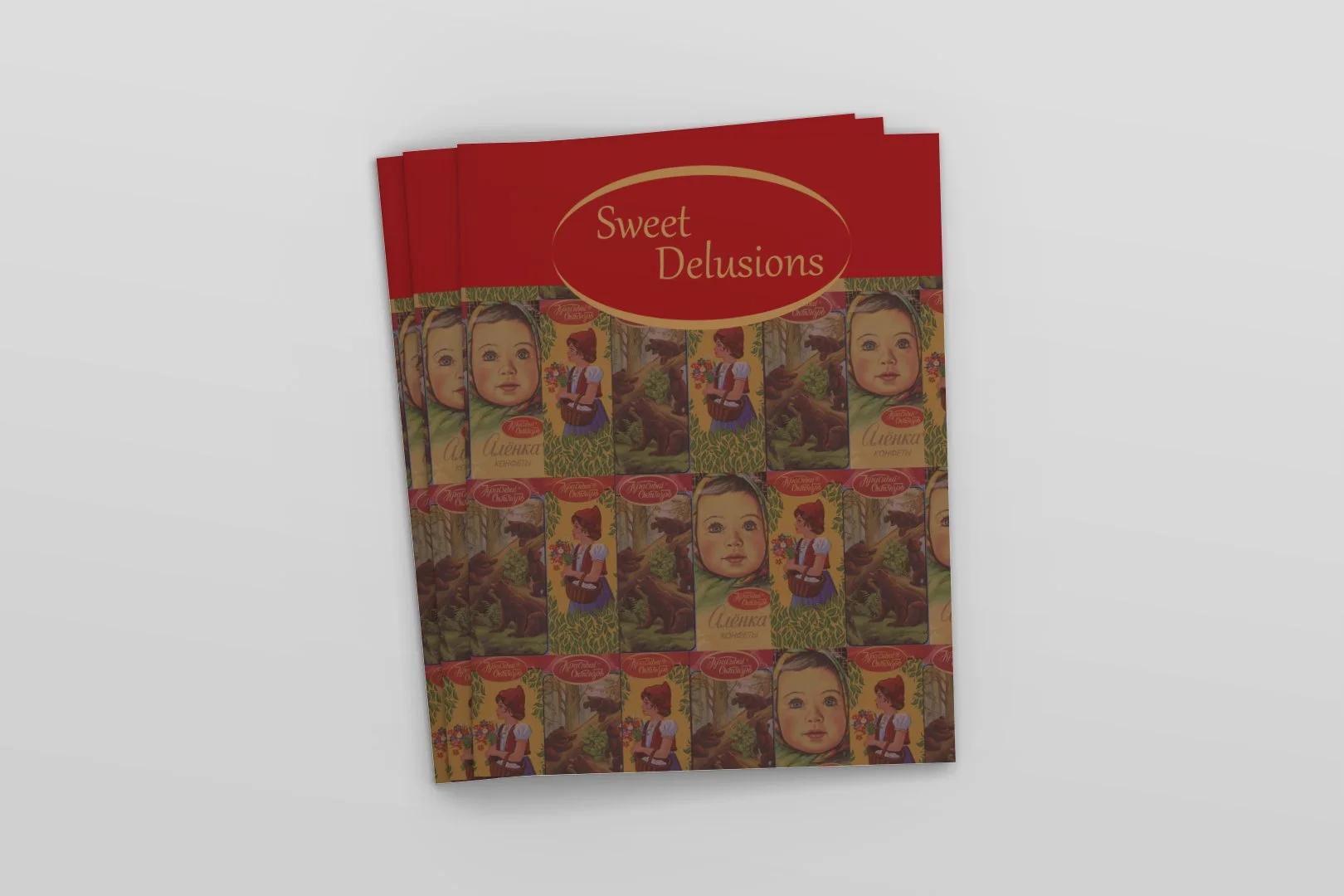
Sweet Delusions
Katheryn Uchaykin
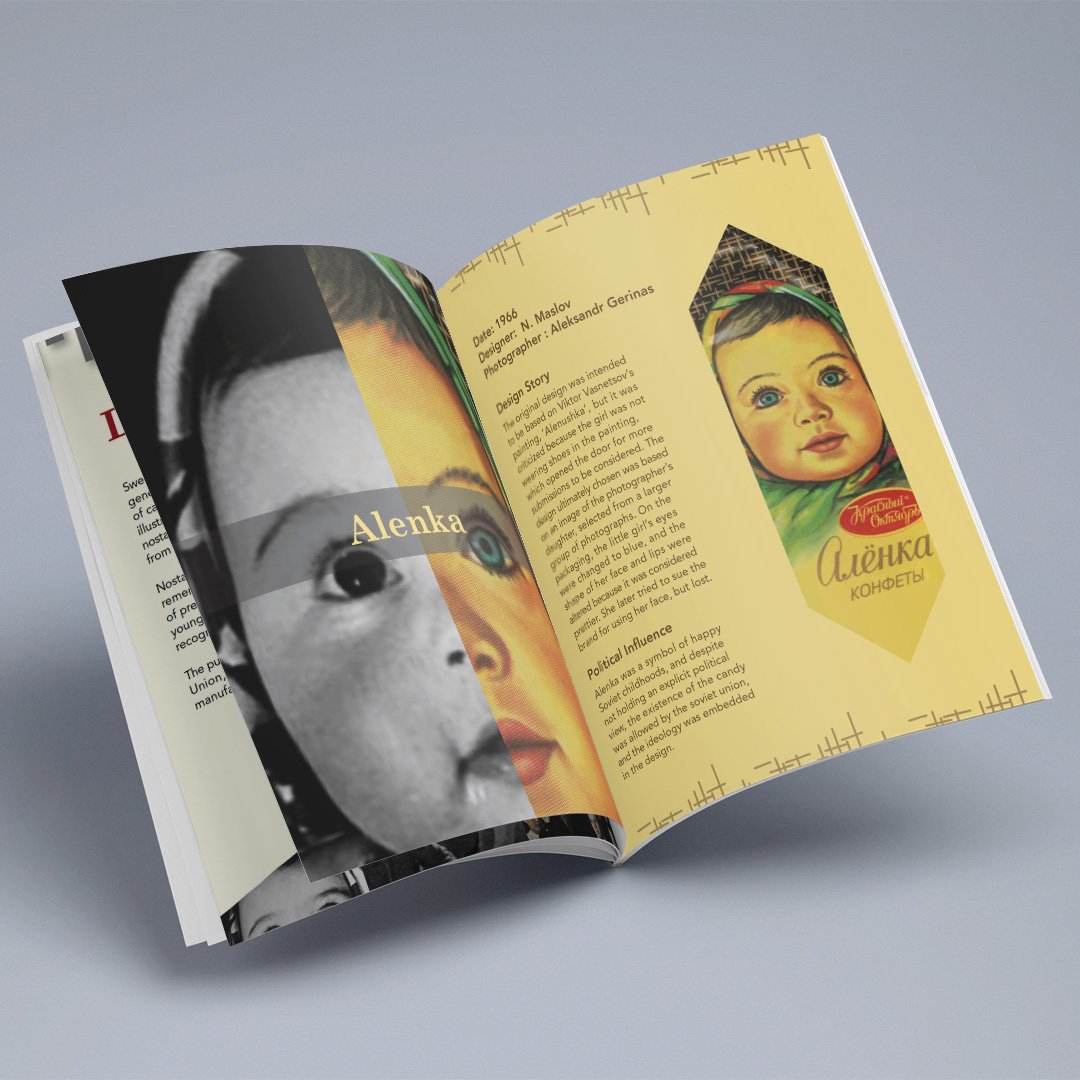
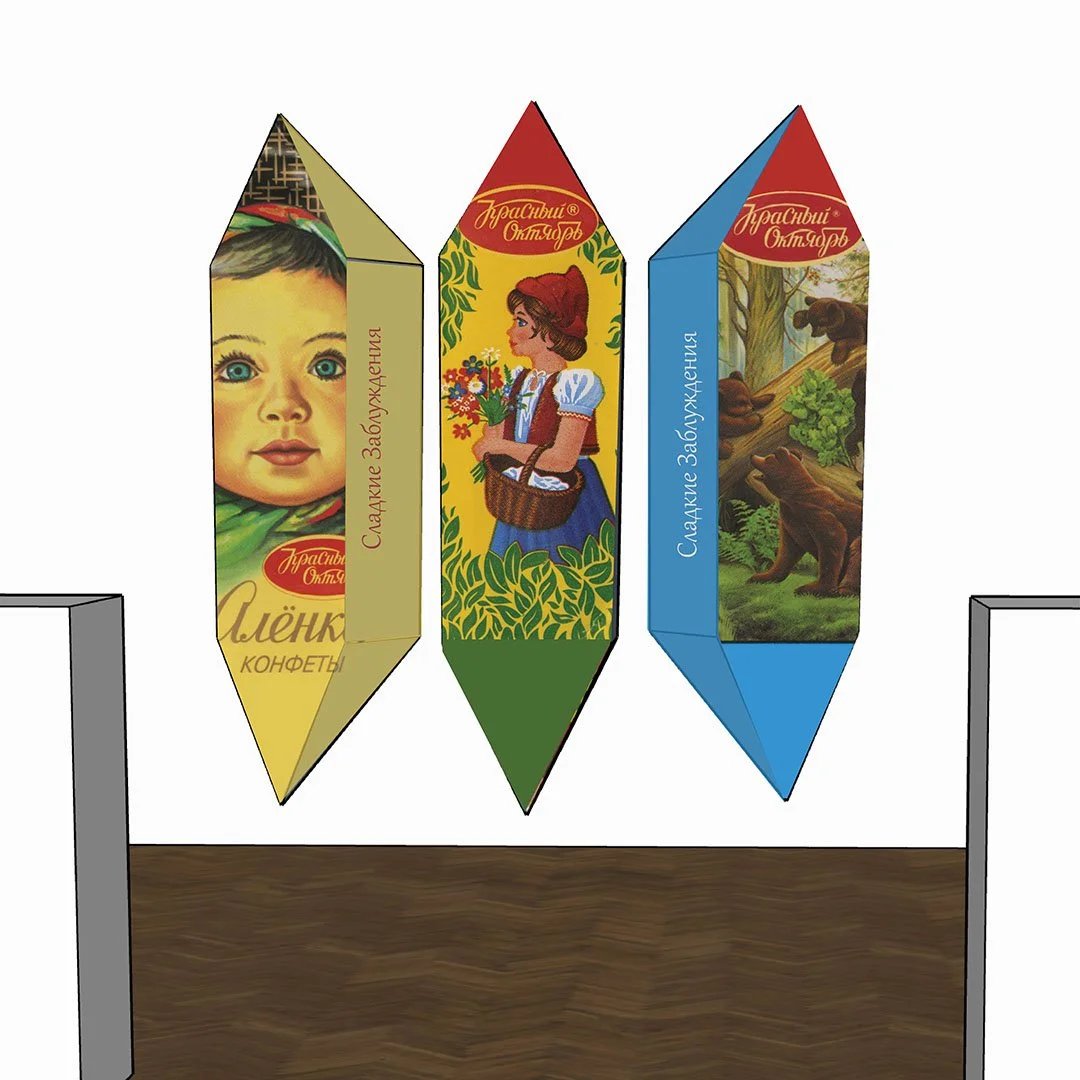
Sweet Delusions examines how political control shaped nostalgia among generations of Russians during the Soviet era, influencing the design of candy wrappers that distorted the realities of everyday life. The bright and colorful illustrations draw from late 1800s folk culture but were designed to evoke nostalgia for a pre-Soviet past that had long since disappeared, distracting from the harsh realities of communist control.
Nostalgia is a powerful tool that can distort and trick a population into remembering a version of life that is neither fully accurate nor reflective of present reality. When applied to candy, a product often consumed by young children who are more vulnerable to influence, that attraction and recognition can begin at an early age.
In the early 1900s, after the Imperial family was assassinated, a communist, authoritarian government took control, nationalized industry, and centralized production and distribution, shaping what people could access. Under Marxism-Leninism, the state’s ideology extended into everyday life, shaping the imagery and design of mass-produced goods as a part of a larger message about identity and belonging. Under the Soviet Government, The Red October brand had full control over what was produced, and the visual clues in illustration type, beauty standards, and national branding reflect this. The purpose of Sweet Delusions is to expose the reality of life in the Soviet Union, the Communist Party's repression, and how it pushed a manufactured narrative of happiness through nostalgic imagery.