In-Sync
Rachel Curtis
How can the components of music be visually translated to help individuals use music intentionally to enhance mood, focus, and cognitive performance? Music has become a widespread companion and universal comfort for many people; from walking or running, studying or designing, or decompressing after a stressful day.
Music is not a single-layered or linear experience, but rather a cohesive and layered system composed of rhythm, melody, harmony, timbre (tone color), texture, dynamics, and form. Each of these elements activates different regions of the brain and engages a number of processes ranging from basic motor skills and pattern recognition to emotional regulation and memory processing.
The cognitive neuroscience of music explores these elements in depth to understand how they stimulate specific neural pathways and how individuals can intentionally use music to enhance productivity, emotional balance, stress regulation and cognitive performance. Music also allows and trains the brain to understand, recognize, and get in sync with patterns, allowing for sustained attention and helping structure time. These skills are essential in all day-to-day life activities.
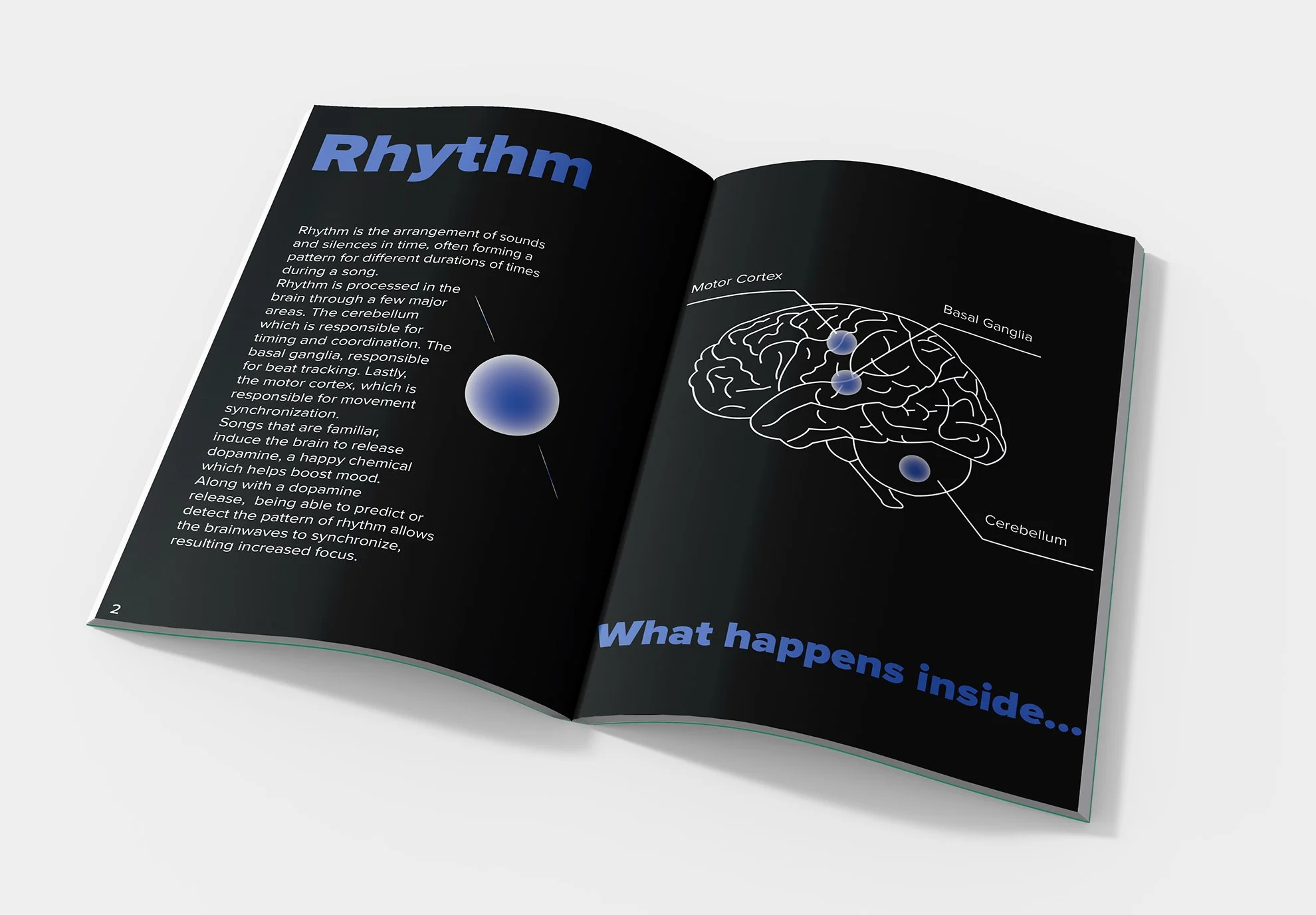
This project explores how these different elements can be presented in a visual format to create a more simplified and accessible understanding. Through a step-by-step visual explanation, each element will be isolated, defined, and demonstrated in relation to its cognitive impact. By creating a visual implementation of the quick and invisible neural processes, individuals can use music not only for enjoyment, but as a tool. With heightened awareness of these components and music as a system, listeners can actively engage with what they hear; processing, adapting, and aligning themselves with the musical elements allows for an enhancement of their daily performance and well-being.