Eri
Samuel Michael
I was born and raised in the United States, and I haven’t returned to Eritrea since I was six years old. Over time, that distance has created both a personal and psychological disconnect from my cultural roots. Growing up in America has been a gift, but it can also feel like parts of my cultural memory have softened or faded.
This project is driven by both an internal and external desire; internally, it offers a sense of personal fulfillment by reconnecting me back to my heritage. Externally, it creates a space to educate and spark curiosity about a country that is often overlooked.
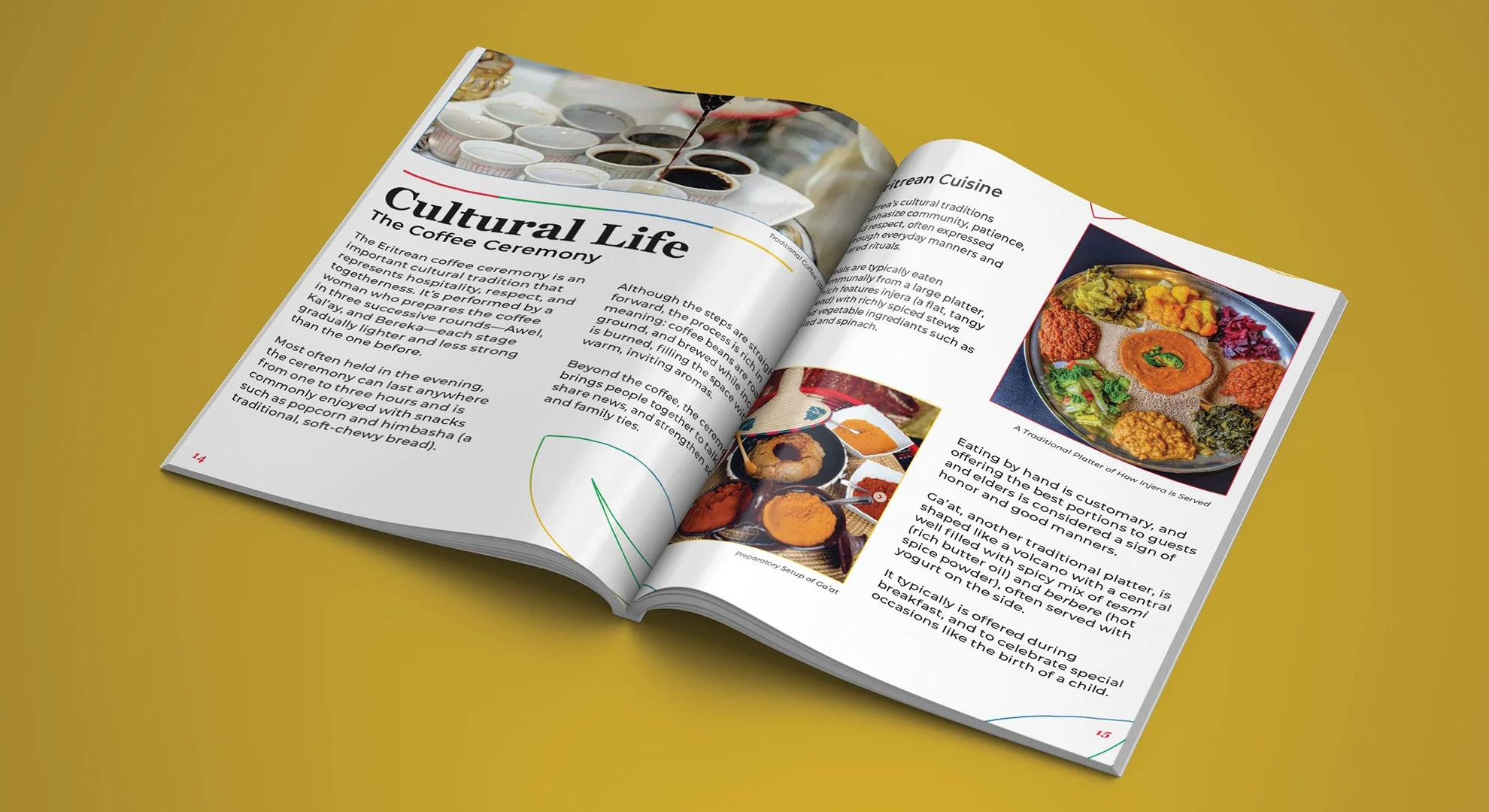
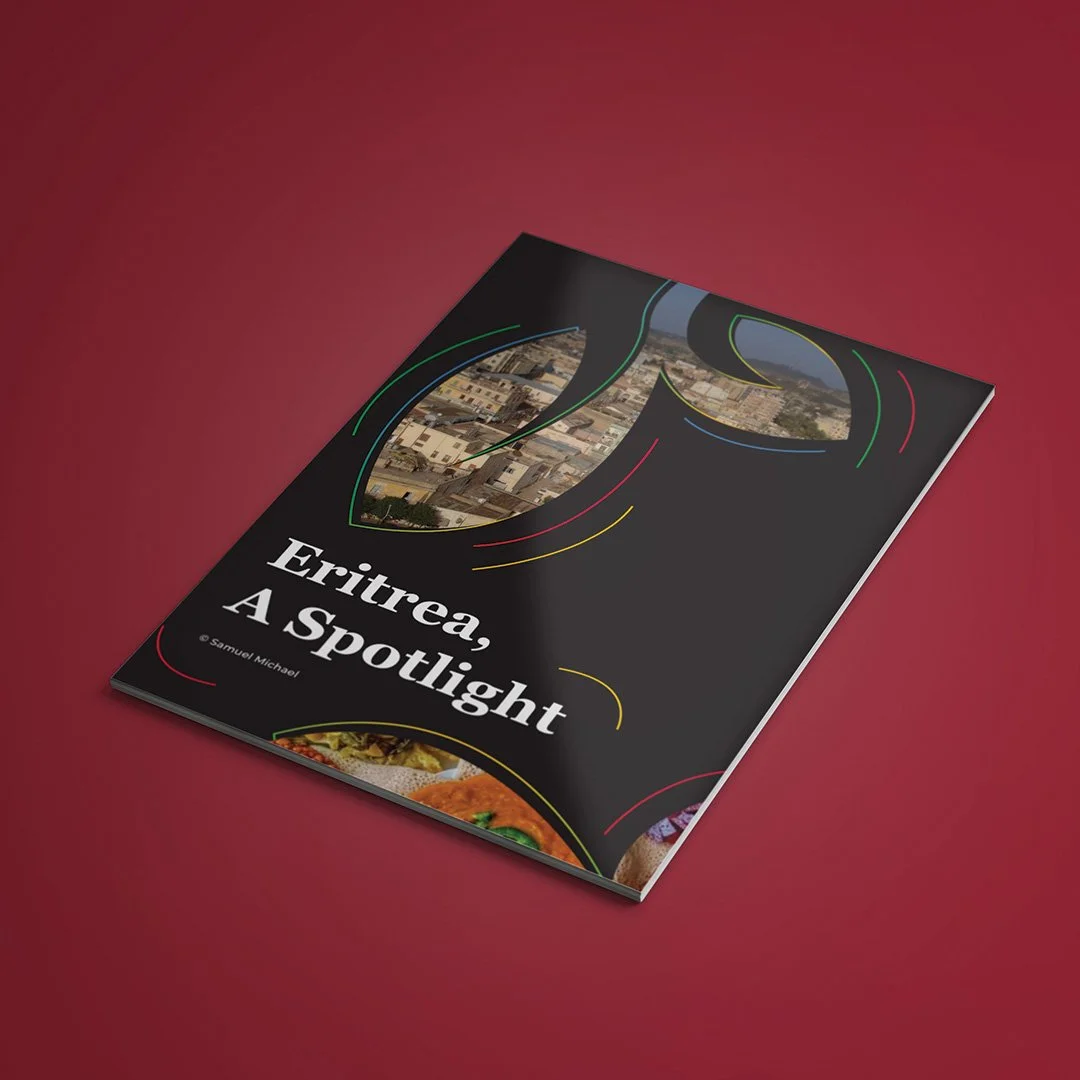
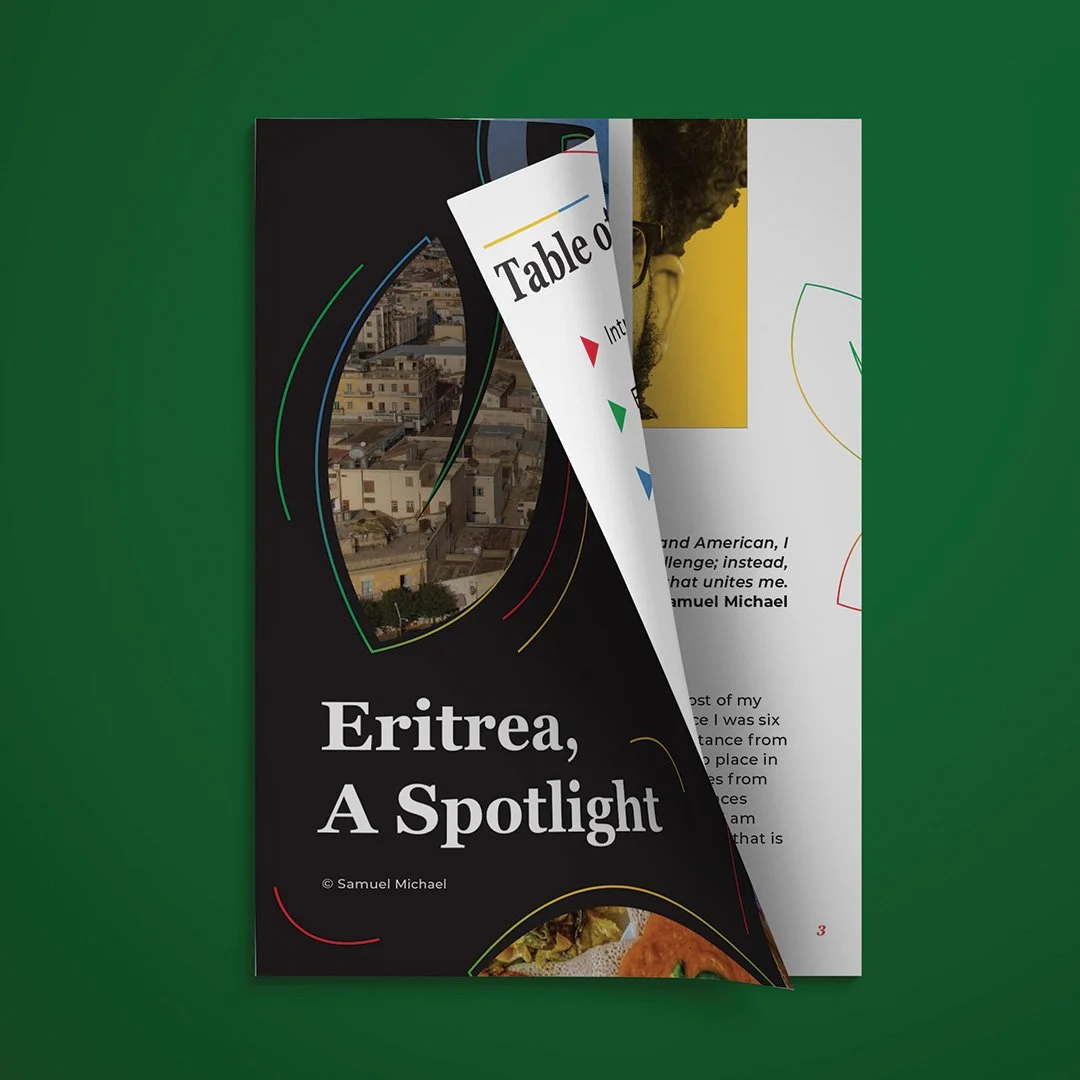
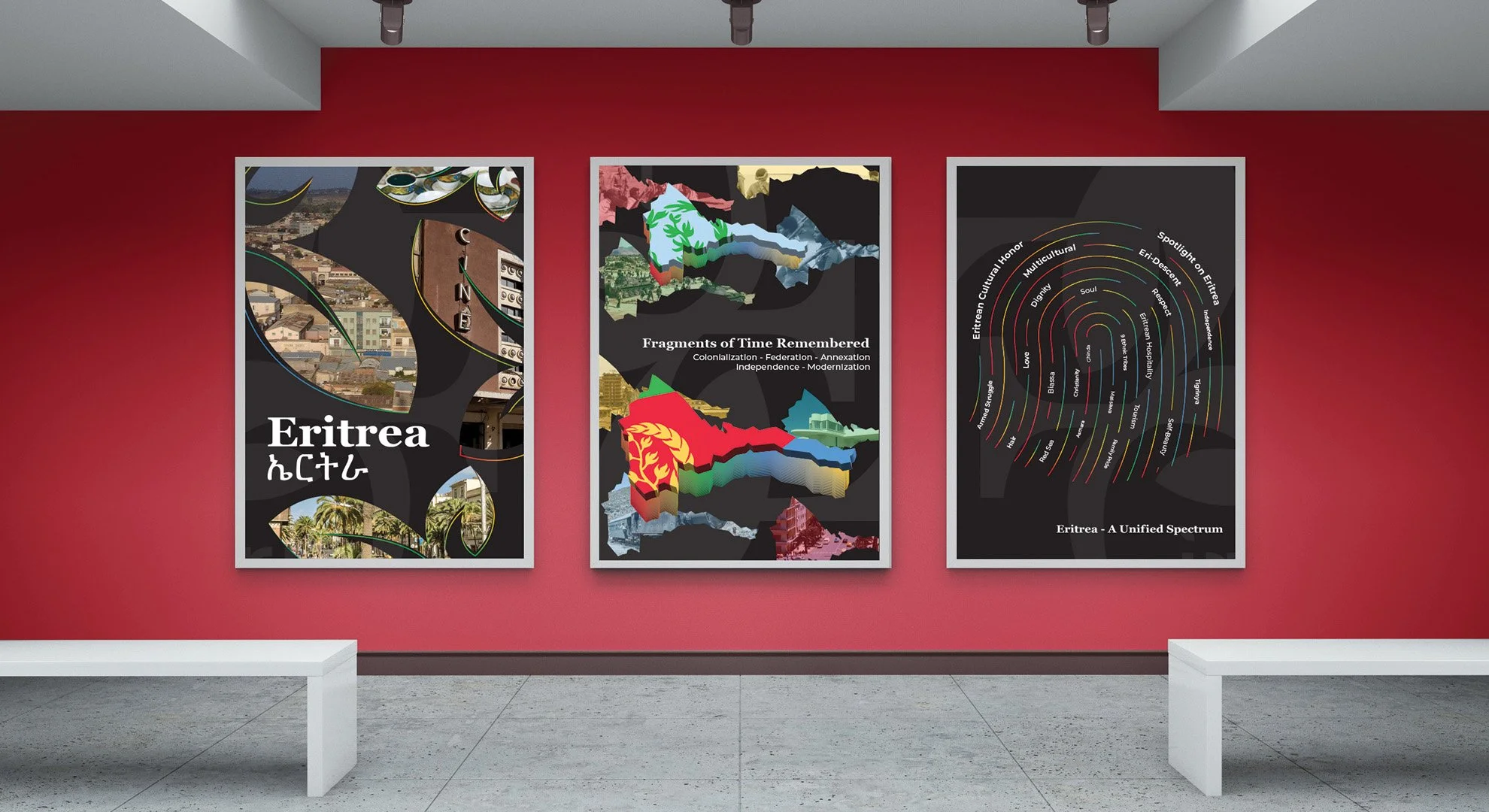
Eri, short for Eritrea, functions as a design-driven social campaign positioning Eritrea as a symbol of modern African identity and enduring cultural recognition. Through visual storytelling, the campaign reframes Eritrea, a small yet historically steadfast nation, as a powerful emblem of preservation, pride, and self-determination.
Afrocentricity, embedded in the project’s visual framework, affirms a centered perspective that positions people of African descent as active authors of their own histories rather than the subjects of Eurocentric narratives.1 In this way, Eri reimagines what an Eritrean space can become when positioned not as a colonial spectacle but as a self-defined cultural anchor shaped by a collective, empowered vision. By adopting a campaign-style approach, Eri extends beyond a static representation into a dynamic experience, ranging from vivid posters and flyers to self-promotional materials such as informative zines and stickers.
Ultimately, Eri stands as a visual testament to the value of cultural differences, affirming that an understanding of diverse perspectives’ histories and traditions is a source of strength. Pause, reflect, and be moved by the fascinating story of Eritrea.
Reference
Asante, Molefi Kete. “The Ideological Significance of Afrocentricity in Intercultural Communication.” Journal of Black Studies 14, no. 1 (1983): 3-19.